İstanbul’un Bakırköy semtinde bulunan Fildamı Sarnıcı, Bizans devrinde yapılmış bir açık hava sarnıcıdır. İstanbul'un dört büyük sarnıcından olan sarnıcın Imparator 1 Justinian zamanında, 6 yüzyılın sonlarına doğru yapıldığı tahmin edilmektedir. Sarnıc duvarlarındaki taşların büyüklüğü ve tuğlaların üzerinde baskı izlerinin olmaması, 6. yüzyıl sonu Bizans yapılarına özgün bir özelliktir. Yerebatan sarnıcından biraz daha büyük olan Fildamı Sarnıcının Yunanca da ismi Hebdomon, yani “Yedinci “ demektir. Bunun nedeni de sarnıcın, İstanbul’ dan mesafeleri ölçmeye yarayan Milion taşı ndan uzaklığının tam yedi mil olmasıdır. Bilindiği gibi Million taşının günümüze gelen bölümü Yerebatan sarnıcının hemen üzerinde yer almaktadır.
Fildamı Cistern, located in the Bakırköy district of Istanbul, is an open-air cistern built during the Byzantine period. It is estimated that the cistern, which is one of the four great cisterns of Istanbul, was built towards the end of the 6th century, during the reign of Emperor Justinian 1. The size of the stones on the cistern walls and the absence of stamps on the bricks, are unique features of the late 6th century Byzantine buildings. The name of the Fildamı Cistern, which is slightly larger than the Basilica Cistern, is Hebdomon, meaning "Seventh" in Greek. The reason for this is believed that the cistern is exactly seven miles away from the Milion stone, which was used to measure distances from Istanbul. As it is known, the part of the Million stone that has survived to the present day, is located just above the Basilica cistern.
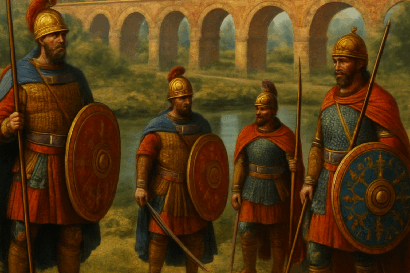
Byzantine Soldiers at Hebdomen created by Cem Ozmeral w Canva
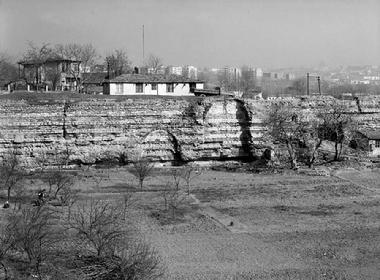
FILDAMI 1960
Hebdomon Sarnıcının görevi İmparator Valens tarafından yaptırılan günümüzdeki Bakırköy semtindeki Magnaura sarayına ve I. Justinian tarafından yaptırılan Ataköy’deki Secundianae sarayına su sağlamaktı. Aynı zamanda sarnıcın suyundan bugün Veliefendi Hipodromu olarak kullanılan alanda karargahı olan Bizans’ın Trakya ordusu da faydalanıyordu. Buradaki askeri kamp alanı, çoğu zaman Bizans İmparatorlarının, imparator ilan edilip göreve başlama merasimlerinin yapıldığı mekan olarak da ün salmıştı.
The task of the Hebdomon Cistern was to provide water to the Magnaura Palace in today's Bakırköy district, built by Emperor Valens, and to the Secundianae Palace in Ataköy, built by Justinian I. At the same time, the Thracian army of Byzantium, which had its headquarters in the area used as the Veliefendi Hippodrome today, also benefited from the water of the cistern. The military camp area here, was also famous as the place where the Byzantine Emperors were declared emperors and their inauguration ceremonies were held.
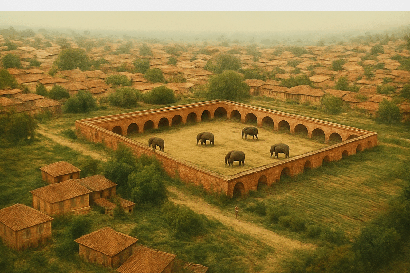
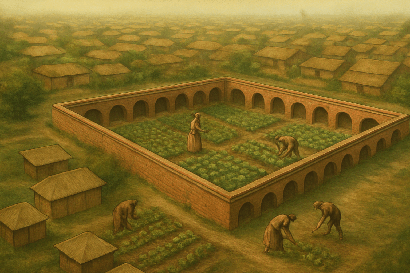
Hebdomon Cistern used as a Elephant Stable and Vegetable Garden. Animations created by istanbullite by Cem Ozmeral and Canva
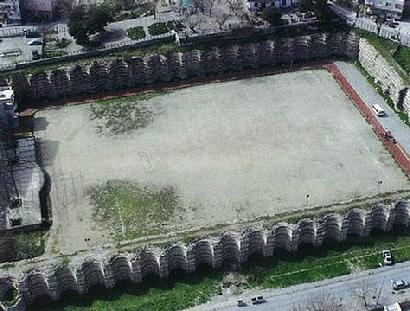
Bir dikdörtgen şeklindeki sarnıcın boyu 127 m (417ft), eni 76 metre(249ft), duvar kalınlığı 4,1 m (13,5 ft) olup su derinliği ortalama olarak 11 metre(36 ft) idi. Buraya getirilen suların civardaki dere ve kaynaklardan mı geldiği, yoksa Trakya ormanları ndan yapay kanallarla mı getirildiği tam olarak bilinmiyor.
İstanbul'un fethinden sonra bu sarnıç önceleri ordunun su ihtiyacını karşılamak için kullanılmış, sonra kurutularak Osmanlı Sultanlarının fillerinin ahırı ve bakım yeri olarak işlev görmeye başlamış. Bu nedenle de sarnıc Fildamı ya da Filhane adını almış. Daha ileriki tarihlerde, İstanbul’da çoğu yerdeki sur duvarları dışında yapıldığı gibi tarım arazisi olarak kullanıma açılmış burada her türlü sebze ve meyve yetiştirilmeye başlanmış.
The rectangular cistern was 127 m (417ft) long, 76 meters (249ft) wide, 4.1 m (13.5ft) thick and 11 meters (36ft) water depth on average. It is not known exactly whether the water brought here came from the streams and springs in the vicinity, or whether it was brought from the Thracian forests through man made channels.
After the conquest of Istanbul, this cistern was first used to meet the water needs of the army, then it was dried up and started to function as a stable and care place for the elephants of the Ottoman Sultans. For this reason, the cistern was named Fildamı or Filhane. Later, it was opened for use as agricultural land, as was done outside the city walls in most places in Istanbul, and all kinds of vegetables and fruits began to be grown here.
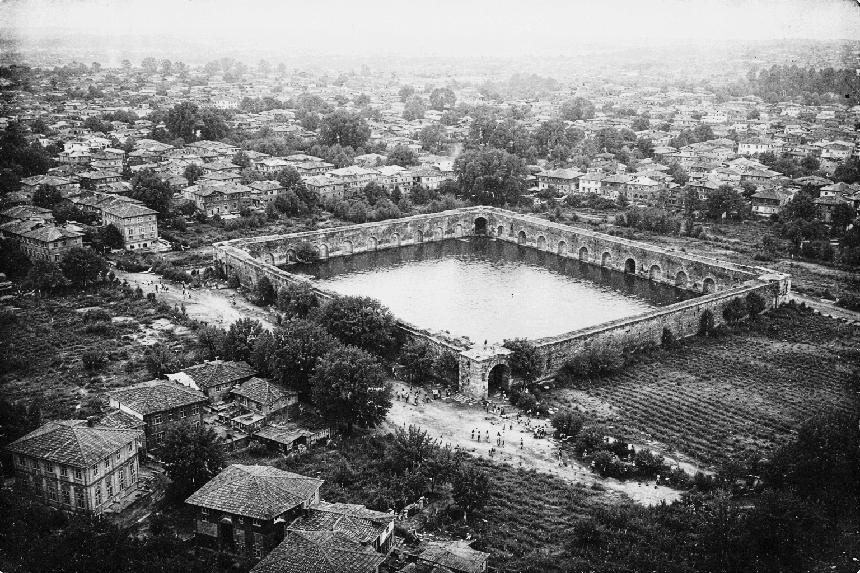
Hebdomon Cisten from the air Photo Sallaopac
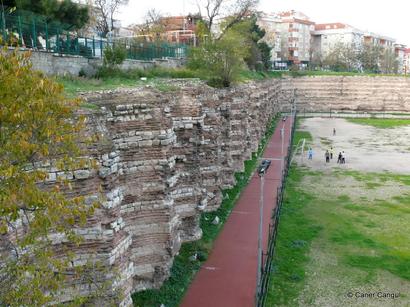
Hebdomon Cistern Today, Photo Kultur Envanteri
Uzun süre özel mülkiyette olan arazi, 1996 da devlet tarafından kamulaştırılıyor ve 12.000 kişilik bir açık hava konser alanı olarak kullanılmaya başlanıyor. Burada Blues Brothers , Roger Glover, Dream Theater gibi ünlü şarkıcı ve gruplar olduğu gibi, Tarkan, Teoman , İbrahim Tatlıses gibi yerli sanatçılar da konser veriyor. Konser gürültüsünün yaptığı titreşimin sarnıç duvarlarının yıpranmasına neden olması ve Veliefendi hipodromundaki atları ürkütmesi nedeniyle, 2003 yılında konserlere ara veriliyor. Bu tarihte sarnıç Bakırköy Belediyesine devrediliyor ve tabii park alanı olarak hiç bir ilave yapılmadan halka açılıyor.
Cem Ozmeral
May 7, 2026
Dublin Ohio
The land, which was privately owned for a long time, was expropriated by the state in 1996 and started to be used as an open-air concert venue for 12,000 people. Famous singers and bands such as Blues Brothers, Roger Glover, Dream Theater, as well as local artists such as Tarkan, Teoman and İbrahim Tatlıses gave concerts here. Concerts were suspended in 2003 because the vibration caused by the concert noise was damaging the cistern walls and frightened the horses in the Veliefendi hippodrome. On this date, the cistern was transferred to Bakırköy Municipality and opened to the public as a natural park area without any modifications.